

Measuring Future Performance
An abstract from “Flying Blind” video narrated by Professor Robert S. Kaplan
- How Traditional Measures Mislead
- Summary of Key Concepts
- The Balanced Scorecard
-
HOW TRADITIONAL MEASURES MISLEAD
Kaplan argues that traditional measurement systems and measures of performance often fail to give the information needed to manage a business. There are two fundamental problems with the way we have measured performance in the past:
- First, traditional financial systems cannot accurately identify which internal factors drive a company’s profits and costs, factors like products, markets, or key customers.
- Second, current financial results can rarely predict future performance. Financial indicators alone do not reveal, for example, whether or not management is building future value for the company by developing new products and improving both customer satisfaction and quality.
Kaplan stats that top management who only depend upon financial figures are like a pilot who looks only to the fuel gauge during his flight, so he is flying blind.
Kaplan introduces two new approaches that take these problems into account: the balanced scorecard and activity-based management.
2. SUMMARY OF KEY CONCEPTS
Why are traditional performance measures, such as operating income and return-on-investment, unreliable guides for organizations navigating a rapidly changing business environment?
Companies today are far more complex than ever before. Products have multiplied and are aimed at increasingly diverse market. To support this product and market propagation, companies have had to increase the support and overhead sections of their organizations. Traditional measures and systems simply cannot handle this organizational, market, and product complexity. Companies do not know which products are helping and which are hurting their overall performance. Some companies are in even worse shape: they think they know, but their information is wrong.
Furthermore, in times characterized by rapid change combined with long-term investment, financial performance measures, used alone, are inadequate for predicting future performance. Why? Because financial indicators do not recognize the future value being created by such current strategic activities as research, advertising, and quality improvements.
Today’s highly competitive business environment increases the dangers of inadequate or inaccurate measures. Companies with poor information (about how they got where they are or where they are going) are extremely unsafe to compete who have better information. In order to remain competitive, companies need to identify and measure those strategic activities that are creating future financial success.
3. THE BALANCED SCORECARD
Professor Kaplan introduces two new ways to measure corporate performance more effectively.
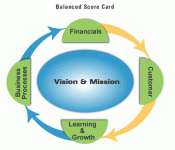
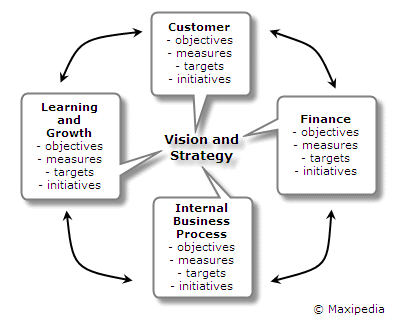
- The balanced scorecard is a management technique with which a company measures performance from four different perspectives:
· Financial
· Customer
· Internal operations
· Innovation and improvement activities
The scorecard is a framework that helps a company select and focus on those strategies that can create future value.
- Activity-based management (ABM) is a new approach to analyzing and understanding the diverse activities within an organization. Based on activity-based costing, ABM can help a company see more clearly which products, markets, and customers drive profitability.
 Robert S. Kaplan is a Professor of Accounting at the Harvard Business School, teacher, consultant, and author. Kaplan is widely considered as one of the founders and leading sponsor of activity-based analysis, costing, and management. With co-author David Norton, he developed the balanced scorecard. He is also co-author of Relevance Lost, published in 1987, from which many of the ideas in Flying Blind film are taken. Before joining the Harvard faculty, Kaplan was professor and dean of the business school at Carnegie-Mellon University in Pittsburgh.

 Human Performance Improvement for you