Let’s set the record straight.
Everyone who is a great leader isn’t necessarily a great manager. And great managers aren’t necessarily great leaders.
So when it comes to the Leaders vs. Managers debate, where do you land?



Let’s set the record straight.
Everyone who is a great leader isn’t necessarily a great manager. And great managers aren’t necessarily great leaders.
So when it comes to the Leaders vs. Managers debate, where do you land?

I remember one instance when I stopped by the graphics department to drop off some charts for a presentation scheduled in the near future. While I discussed my requirements, chart by chart, the graphic artist continually nodded his head in agreement. We were in synchronized, or so I thought. I then proceeded to ask “When can I have the completed charts?” to which he replied. “Two weeks is our normal turnaround time.” I said “That’s OK.” He then went on to say, “Of course, that’s unless we get bogged down in our ongoing work or unless we get a higher priority job.”

All of us recognize that our time on the job is spent performing tasks that will somehow support a sale. We, as a corporation, are in business to provide goods and services in exchange of revenue.

Employee engagement is the emotional commitment that an employee has towards an organization. Many people often confuse engagement with employee happiness or employee satisfaction, and although they are close, it is not necessarily the right definition.
The definition is much more complex than that and requires a more complete view of an employee’s life at work.
That commitment comes from how well an employee’s personal goals and values align with the organization’s goals and values.
The following article by Mr. Jacob Shriar will give many idias that can be applied to increase employees engagement and reduce turnover.

5 Conversation Tips to Make You More Memorable in 30 Seconds or Less
The WordPress.com stats helper monkeys prepared a 2015 annual report for this blog.

Here’s an excerpt:
A New York City subway train holds 1,200 people. This blog was viewed about 3,900 times in 2015. If it were a NYC subway train, it would take about 3 trips to carry that many people.

Adding to the Sale is a skill by which the salesman sells the Customer everything related to his order that he may needs.
Here is a story that illustrates this and its importance.

Course Type: Technical Skills
Course Overview: This course will discuss the basic components and operations of power train systems. Basic components included are; clutches manual shift transmissions and power shift transmissions. Basic components and component functions are explained as they relate to the operation of various power train systems. We will discuss also methods for transferring power with hydraulic components, mechanical power train components, differentials, brakes, final drives and undercarriage. Read more 

The Elite Sales Men Seminar
And Sales Intelligence
Training Type: Selling Skills
OVERVIEW:
This seminar will cover both fundamental and specialized selling skills. So, either newly employed sales representatives, or staff newly appointed to this job can be benefited from this meeting. Also experienced salesmen who want to refresh their memory and enhance their skills are most welcome. This seminar is part 1 of the successive sessions embedded in the “selling skills development program”. It has to be followed by the “Professional Selling Skills seminar” and the “Negotiation skills workshop” Seminars. The seminar is highly participative and supported by several role-plays and real situations videos.
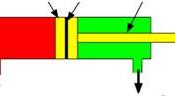
This course is designed to teach the basic hydraulic fundamentals, to identify and state and the function of the various valves used in hydraulic systems, to identify and state the function of vane pumps, gear pumps and piston pumps, to know how to disassemble and assemble hydraulic components, to identify and state the function of ISO hydraulic symbols and to trace the oil flow and state the operation of various hydraulic systems.

 Human Performance Improvement for you